
Is Solar Worth It in NSW? A 2026 Reality Check

Short answer: for most NSW households, solar is still worth it in 2026, but the reason it's worth it has changed. Ten years ago you got paid handsomely to export power. Now feed-in tariffs are worth a few cents, and the value sits in every kilowatt-hour you use yourself instead of buying from the grid at many times the price.
We've been installing solar across the Northern Rivers a since well before it was fashionable, so here's the honest maths: what a system costs, what the rebates actually are, when the numbers stack up, and the situations where we'd tell you to keep your money.

What Solar Costs in NSW in 2026
A quality 6.6kW system, still the standard family-home size, typically costs between $5,000 and $8,500 installed after rebates, depending on the panels, the inverter and the complexity of your roof. Prices at the very bottom of the market exist, but gear that's going to sit on a Northern Rivers roof baking in sun and copping storms for 25 years is a strange place to save a few hundred dollars.
The main upfront discount is the federal Small-scale Renewable Energy Scheme, which pays you in Small-scale Technology Certificates (STCs) assigned to your installer at the point of sale. Worth knowing: the STC deeming period stepped down again on 1 January 2026, trimming the typical 6.6kW discount to roughly $1,700 to $1,900, a few hundred dollars less than last year, and the scheme keeps stepping down until it ends in 2030. The rebate genuinely shrinks every year you wait.
Feed-In Tariffs Have Collapsed. It Matters Less Than You Think
IPART's voluntary benchmark for NSW solar exports in 2026-27 is just 3.4 to 6.5 cents per kilowatt-hour, down from the previous year, and retailers set their own rates, with midday exports worth close to nothing on some plans. If your maths depends on export income, solar looks ordinary.
But that's the wrong maths. Every kilowatt-hour of your own solar you use directly is a kilowatt-hour you don't buy from the grid at full retail rates, which are several times the export rate. Self-consumed solar is worth five to ten times what exported solar earns. The practical move is simple: run the dishwasher, washing machine, pool pump and hot water during daylight, and the system pays you at grid rates instead of export rates.
Payback: The Number That Decides It
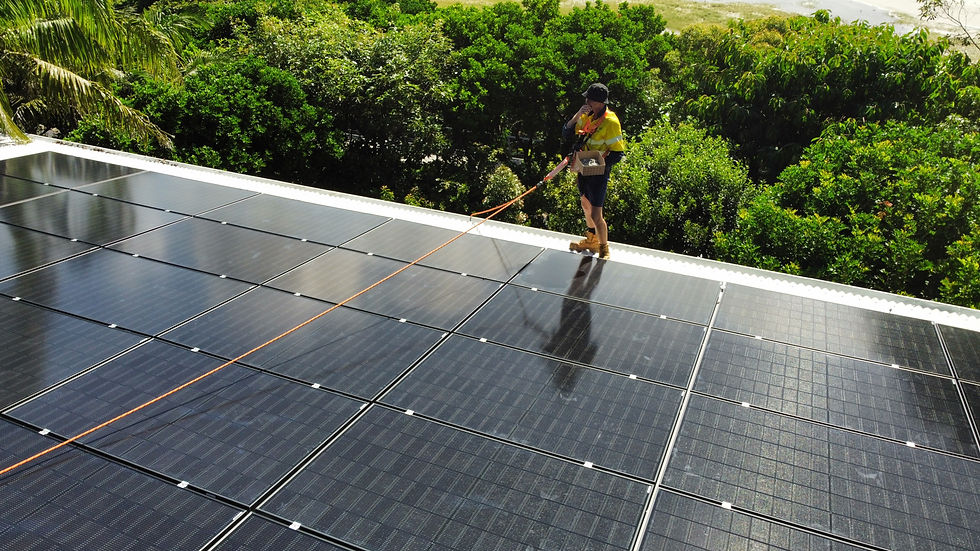
For a typical NSW household, a well-sized 6.6kW system pays for itself in roughly three to five years. Published worked examples land in the same zone: around $1,900 a year in savings on an $8,000 installed system works out to payback just inside five years, and homes that shift more usage into daylight hours do better than that.
After payback, the electricity is effectively free for the rest of the system's life, and quality panels are warranted for 25 years. The honest flip side: payback stretches out for households with small power bills, heavily shaded roofs or poor orientation. Solar rewards people who use power, which is why the first thing worth checking is your own bill, not a brochure.
The Rebates, Loans and Battery Support Available in 2026
Federal STC discount: applied upfront by your installer, roughly $1,700 to $1,900 on a typical 6.6kW system this year, stepping down annually to 2030
Federal battery support: the Cheaper Home Batteries program currently reduces battery costs by roughly $320 to $370 per kilowatt-hour installed
NSW Home Energy Saver: interest-free loans of up to $15,000 over 10 years for households with combined income under $210,000, covering solar, batteries and other upgrades
Upfront discounts of up to $4,000 for lower-income NSW households have been flagged for later in 2026, worth watching if you qualify and aren't in a rush
Virtual power plant (VPP) incentives can add value for battery owners willing to connect to a VPP
Whether a battery stacks up depends on your evening usage and tariff. With current support it's closer to worthwhile than it has ever been, but it's a case-by-case call, and we'll run your numbers rather than sell you a box.
When Solar Is Not Worth It (Our Honest Take)
Your power bills are already small. A $200-a-quarter household has little to harvest, and the payback maths drags
Your roof is heavily shaded or you're planning to move within a couple of years
Your switchboard isn't up to it yet. Plenty of older Plateau and hinterland homes are still running ceramic fuses, and the board needs sorting before panels go anywhere near the roof. Not glamorous, but it's the safe order of operations
The quote is suspiciously cheap. Budget panels and no-name inverters fail early, and a failed inverter in year six eats the savings that made the system worth it
If any of those apply, we'll say so. We'd rather walk you through what's worth doing now versus what can wait than sell a system that disappoints you.
The Northern Rivers Angle
Up here the case for solar is stronger than the state average: generous sun hours, big daytime loads through summer, and plenty of room on rural rooves. The flip side is our weather. Storms, humidity and salt-laden air punish cheap hardware, so panel and inverter quality, proper mounting and a tidy, compliant install to AS/NZS 3000 matter more here than in a city suburb.
Coughran Electrical has been wiring the Northern Rivers since 2000, and our installers are Clean Energy Council accredited. Same local crew for the switchboard, the solar and the battery, which means one set of accountable hands and no finger-pointing between trades.

Frequently Asked Questions
How much does a 6.6kW solar system save per year in NSW?
Typical NSW households save in the order of $1,500 to $1,900 a year with a well-sized 6.6kW system, depending on how much of the solar they use directly. Households that shift washing, dishwashing, pool pumps and hot water into daylight hours sit at the top of that range. Your bill and usage pattern give the real answer, which is what a proper quote should be built on.
Are batteries worth adding in NSW in 2026?
They're closer than they've ever been. Federal support currently trims battery costs by roughly $320 to $370 per kilowatt-hour installed, and VPP incentives can add more. Whether it stacks up for you depends on your evening usage and tariff structure. For some homes it's genuinely worthwhile; for others, solar alone remains the better spend. We'll tell you which you are.
Will feed-in tariffs keep dropping?
The trend has been down for years, and IPART's 2026-27 benchmark of 3.4 to 6.5 cents per kilowatt-hour is lower than the year before. Sensible planning assumes export income stays modest, which is exactly why systems should be sized and used around self-consumption rather than export earnings.
How long do solar panels last?
Quality panels carry performance warranties of around 25 years and typically keep producing beyond that, while inverters generally need replacing somewhere in the 10 to 15 year range. That's the strongest argument for buying decent hardware: the system outlives its payback period several times over if the gear is up to the job.
Is my roof suitable for solar?
Most are. North-facing roofs are ideal in NSW, but east and west orientations still perform well, and panel layouts can work around chimneys and valleys. The genuine deal-breakers are heavy shading and, in some older homes, roof or switchboard condition, both of which we assess honestly as part of a quote rather than discovering on install day.
About the Author
The Coughran Electrical Services Team, ARC Tick authorised, Master Electricians Australia
Coughran Electrical Services has served the Northern Rivers region of NSW since 2000, handling residential, commercial and industrial air conditioning, electrical and solar work. The team is ARC Tick authorised for refrigerant handling and holds full electrical contractor licensing, so every cassette installation is completed and certified to Australian standards.


