
Ducted Air Conditioning vs Split System: Which Is Right for You?

Quick Overview:
A split system is the better buy if you mainly heat and cool one to three rooms.
Ducted air conditioning suits whole-house comfort provided your roof space can take the ductwork.
Indicative installed prices: roughly $1,800 to $4,800 for a split system and $14,000 to $19,000 for ducted, depending on site conditions.
A multi split runs up to 5 wall heads off one outdoor unit and sits between the two on price.
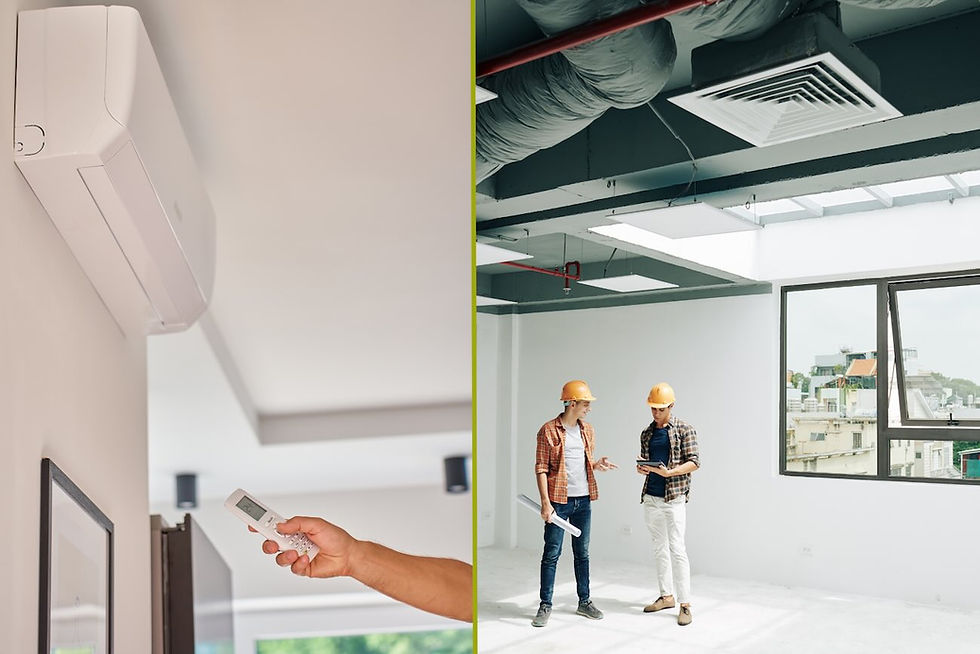
If you want to heat and cool one to three rooms, a split system or two is the better buy. If you want the whole house comfortable from one controller and want to avoid a system hanging off the walls, ducted air conditioning is worth the extra money, as long as your roof space can take the ductwork and you set it up with zoning. That's the short answer to ducted air conditioning vs split system, and it holds for most Northern Rivers homes we walk into.
The longer answer comes down to five things: how many rooms you use, your budget, the shape of your roof cavity, how you'll run the system day to day, and what your switchboard can handle. Here's how each one plays out, including where a multi split fits in.
How Split Systems and Ducted Air Conditioning Work
Split systems
A split system has two parts: a wall-mounted head inside the house and a compressor unit outside, joined by refrigerant pipework through the wall. Each head looks after one room and in order to cover three rooms, you can install three separate split systems. Another method of covering multiple rooms with a split system is through a multi split, which connects up to five wall units inside to a single outdoor unit. We compare multi splits with ducted systems further down.
Almost every split sold today is a reverse cycle with an inverter compressor, which allows for the same unit to heat or cool a room. An inverter air conditioner adjusts how hard its compressor works instead of just turning it on and off. A standard system runs at full power until the room reaches your set temperature, then switches off and starts again once the temperature drifts. An inverter system slows the compressor down as the room gets close to your set temperature and keeps it running gently to hold it there. That means less power is wasted on repeated start-ups, the temperature stays steadier, and the unit runs more quietly.
Ducted air conditioning
Like a split system, a ducted air conditioner has an indoor unit and an outdoor unit. The difference is where the indoor unit goes. Instead of being mounted on a wall, it’s hidden in the roof space or under the floor in some raised homes, and it pushes air through a network of ducts to vents in each room. That means you can heat or cool the whole home from one system, with nothing on show except the vents. Ducted systems allow you to turn the system on and off and set the temperature from one control panel on the wall.
Zoning splits the house into areas, usually living and sleeping, giving you full control over what areas are being heated or cooled and when. Inside the house all you see are the vents and the controller. It's also usually the quietest option because the noisy parts sit in the roof and outside of the house.
Ducted Air Conditioning vs Split System: What Each Costs to Install
Upfront cost is where the gap is widest. Indicative 2026 installed prices across Australia sit roughly here, all of which is dependent on brand, model, and site conditions:
Single split system: about $1,800 to $4,800 supplied and installed, depending on size and brand
Multi split system: about $4,200 to $8,000 for a two-head setup, with each extra head adding around $1,000 to $1,500
Ducted reverse cycle: about $14,000 to $19,000 installed for a typical home, and complex jobs can pass $20,000
These are national ballpark figures, not a quote. Your price depends on site conditions: the kW capacity the house needs, how much room there is to work in the roof, pipe and duct run lengths, where the outdoor unit can sit, and whether the switchboard needs work first. Treat the ranges as a starting point and compare multiple written quotes that list the make, model and capacity.
Run the numbers against how you live, too. Three split systems for the living room and two bedrooms will often land somewhere between $5,500 and $14,000. If those are the only rooms you use, that's a lot of comfort for less than a ducted install.
Which Is Cheaper to Run, Ducted or Split?
On paper, the split system wins. The federal government's Your Home guide lists fixed inverter split systems as the most efficient domestic air conditioners.
How you use it matters more. A ducted system with zoning that cools or heats the living area in the afternoon and the bedrooms at night can run at a sensible cost. A ducted system pushing air into every room of a four bedroom house at all times will certainly impact your electricity bill. Zones and thermostats are essential to keeping energy use down, and ducts should be insulated to at least R1.5 with sealed joints.
How you use your air conditioner can make a bigger difference to running costs over time than the system you choose. Set the thermostat sensibly, because each extra degree of heating or cooling adds roughly 5–10% to your energy use. It also helps to have rooftop solar. On hot, humid Northern Rivers summer days, you’ll run the air conditioner hardest in the middle of the day, which is when solar panels produce the most power. That means you can cool your home with your own electricity instead of paying for power from the grid.
Ducted Air Conditioning vs Multi Split System
If you want several rooms covered but ducted is out of budget, or your roof won't take ductwork, a multi split is the middle path. One outdoor unit runs two to five indoor wall heads, each with its own remote, so every room is controlled on its own.
Compared with ducted, a multi split system usually costs less, doesn’t need roof space for ductwork and gives you separate control in every room. The main trade-off is looks: you’ll have a head on the wall in each room. Ducted is the better choice if you want something discreet, or you need air spread evenly through a larger floor plan.
Our rule of thumb: for three or four rooms in a home with a tight or low-pitched roof, a multi split is usually the smarter spend. For five or more rooms with decent roof space, ducted tends to make more sense. And if it's one big open-plan room you're worried about, have a read of our cassette air conditioner guide, because a ceiling cassette can beat both.
Split System vs Ducted Air Conditioning: Which Suits Your Home?
Choose a split system if
You mainly use one to three rooms
You want the lowest upfront cost and the quickest install
You're renting or likely to move within a few years
Your roof is flat, very low-pitched or has no access for ductwork
Choose ducted air conditioning if
You want the whole house comfortable, hallways included
You'd rather not have units on the walls
You're building, renovating or already opening up the ceiling
You have reasonable roof cavity space and plan to stay put
The Northern Rivers factors
A few local quirks change the answer. Plenty of older homes have low-pitched roofs or raked ceilings that leave little room for a ducted unit, while timber homes up on stumps can sometimes run ducts under the floor instead. Close to the coast at Byron Bay, Ballina or Lennox Head, ask about corrosion protection on the outdoor unit, because salt air is hard on condenser coils. And through a muggy summer, the dry mode on a reverse cycle system, ducted or split, pulls the stickiness out of the air without freezing the room.
What the Installation Involves (and Why It Isn't DIY)
Whichever way you go, the install needs multiple licences in NSW: an electrical licence for the wiring, an air conditioning and refrigerant license for the air conditioning and an ARC refrigerant handling licence for the gas work. The job must meet AS/NZS 3000 wiring rules and AS/NZS 5149 refrigeration safety standards. Buying a split system online and fitting it yourself is illegal, unsafe and will usually void the manufacturer's warranty.
Check the switchboard before you commit. Ducted and multi split systems put a sizable load on your power supply, and some larger ducted units need three-phase power. Older homes still running ceramic fuses may also need a switchboard upgrade before a big system goes in.
Because Coughran Electrical is both a licensed electrical contractor, ARC Tick authorised, and licensed for air conditioning installation, the same crew completes the job from start to finish. We've been doing air conditioning installation across the Northern Rivers since 2000.
Need help in the Northern Rivers? Call (02) 6680 4173 for a free, no-obligation quote on ducted or split system air conditioning.
Frequently Asked Questions
Is ducted air conditioning better than a split system?
Not automatically. Ducted is better for heating and cooling a whole house evenly with nothing on the walls. A split system is better value for one to three rooms, costs less to install and is the most energy efficient type of domestic air conditioner according to the Your Home guide. The right pick depends on how many rooms you use and how much roof space you have.
Is ducted reverse cycle air conditioning more expensive to run than a split system?
Usually, if you compare one split system cooling one room with a ducted system running the whole house, the split system is cheaper to run. With zoning set up properly, so only the rooms in use are conditioned, ducted running costs come down a long way. Sensible thermostat settings and daytime solar make a bigger difference on running cost than the type of system you choose.
How long does it take to install ducted vs split system air conditioning?
A single split system is often installed in a day. Ducted systems usually take two to four days, depending on the home, the roof space and the number of zones. Any switchboard work needed is best scheduled before the install starts.
Can ducted air conditioning go into an older home?
Often, yes, if there's enough roof cavity space for the indoor unit and ductwork, or room under a raised floor. Low-pitched roofs, raked ceilings and older switchboards are the usual hurdles. A site visit answers the question quickly.
Do I need a licensed installer for a split system?
Yes. Any air conditioner installation in NSW needs an electrical licence for the wiring, an air conditioning and refrigerant license, and an ARC refrigerant handling licence for the gas work, and must meet AS/NZS 3000 and AS/NZS 5149. DIY installation is illegal, dangerous and will usually void the manufacturer's warranty.
How often should a ducted or split system be serviced?
For a home, twice a year is the sweet spot, ideally once in spring and once in autumn, so faults are caught before the heavy-use months. Clean the filters regularly in between. Many manufacturer warranties are also reliant on regular servicing, so check the terms for your unit.
Not sure whether ducted or split suits your place? Call Coughran Electrical on (02) 6680 4173, email info@coughranelectrical.com.au or get in touch online for a free quote. Local, licensed and authorised, serving the Northern Rivers since 2000.
About the author
The Coughran Electrical Services Team, ARC Tick authorised, Air Conditioning and Refrigerant Licensed, Master Electricians Australia
Coughran Electrical Services has served the Northern Rivers region of NSW since 2000, handling residential, commercial and industrial air conditioning, electrical and solar work. The team holds all required licenses, authorisations, and accreditations, meaning ducted and split system installation is completed and certified to Australian standards.


