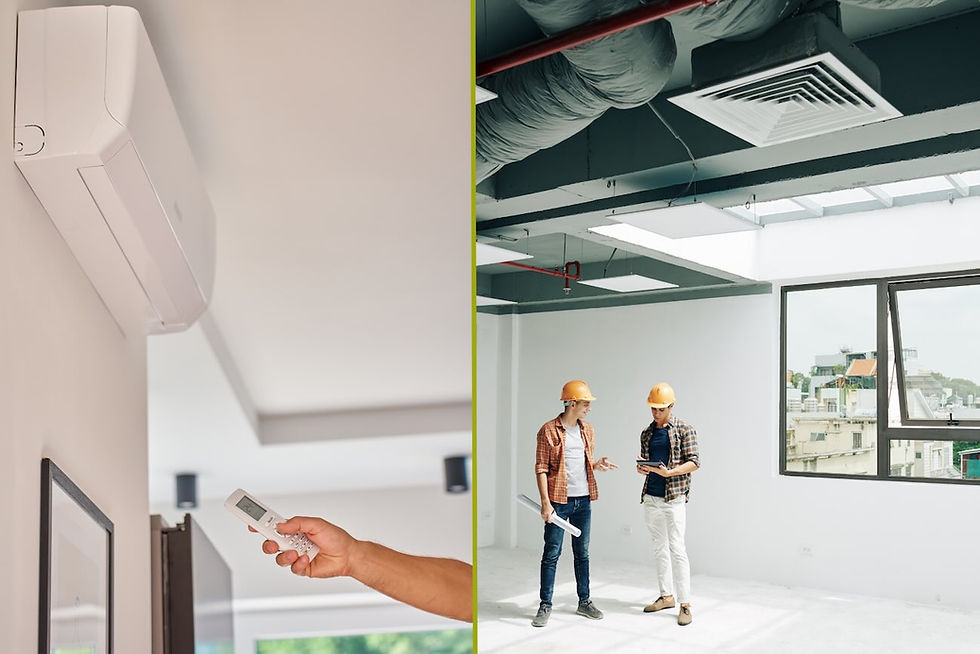
Cassette Air Conditioners: A Buyer's Guide

A cassette air conditioner is a reverse cycle system with an indoor unit recessed into the ceiling, leaving only a flat decorative grille visible from the room below. Cool or warm air pushes out through that grille in up to four directions, so a single ceiling cassette can hold an even temperature across an open-plan space with no wall or floor unit in sight. It runs on the same split system technology most Australian homes already use, just mounted out of the way.
That out-of-sight design is the main reason homeowners and small business owners pick one over a wall-mounted unit. This guide walks through how a ceiling cassette handles heating and cooling, what it costs to install in Australia, the licensing the job legally requires, and how to choose and size the right unit for your room.

What Is a Cassette Air Conditioner and How Does It Work?
A cassette air conditioner has two parts: an indoor unit hidden above the ceiling and an outdoor unit, the condenser, mounted outside. Refrigerant runs between them through insulated pipework. The indoor unit draws in air, heats or cools it, and returns it through the ceiling grille in a 360-degree pattern.
Because it is a reverse cycle system, the one unit handles both heating and cooling. In summer it pulls heat out of the room. In winter it runs in reverse and brings warmth in. That multi-directional airflow is what sets a ceiling cassette apart from a wall split, which blows in a single direction and can leave the far corner of a room warmer than the rest.
Benefits of Ceiling Cassette Air Conditioners
The biggest drawcard is how little of it you see. The indoor unit sits inside the ceiling cavity, so you free up the wall space a split system would take and keep the floor clear for furniture. In a room with floor-to-ceiling windows or a tight wall layout, that discreet air conditioning profile is often the deciding factor.
• Even temperature: the 360-degree airflow spreads heating and cooling across the whole room, with fewer hot and cold spots than a single wall unit.
• Quiet operation: inverter compressors ramp up and down rather than switching hard on and off, which keeps both noise and running costs down.
• Flexible control: most models offer wifi control and zoning, handy for larger or open-plan rooms where you want different areas set differently.
• Year-round comfort: reverse cycle means heating in winter and cooling in summer from the same hardware, with no second appliance to buy.
Cassette vs Split System, Ducted and Bulkhead
A wall-mounted split system is cheaper to buy and quicker to install, and for a single bedroom or study it is usually the smarter spend. A cassette earns its premium in open-plan living areas and light commercial spaces, shops, offices and restaurants, where even airflow and a hidden profile matter more than the upfront price.
Ducted air conditioning is the better fit when you want to condition the whole house from one system through vents in every room. A bulkhead unit, which hides above a dropped section of ceiling and pushes air out horizontally, suits narrow hallways or rooms where a central ceiling grille will not fit. For one large, open room, the cassette is hard to beat.

How Much Does a Cassette Air Conditioner Cost to Install?
Expect a cassette installation to cost noticeably more than a wall split of the same capacity, commonly around 40 to 60 per cent more, because of the ceiling and drainage work involved. A straightforward residential cassette install often runs from about $1,200 to $2,500 in labour on top of the unit itself, while commercial jobs with long pipe runs or several indoor units can climb into the thousands per unit.
What moves the price: the kW capacity of the unit, your ceiling type (a suspended ceiling is far simpler than cutting and patching plasterboard), how far the indoor unit sits from the outdoor unit, and any switchboard or wiring upgrades the job needs. Get at least three written quotes before you commit, and check each one lists the make, model and capacity.
Why a Licensed Installer Is Not Optional
In Australia, installing a cassette air conditioner legally needs two tickets: an electrical licence for the wiring and an ARC refrigerant handling licence for the gas work. The installation must meet AS/NZS 3000 wiring rules and AS/NZS 5149 refrigeration safety standards. DIY installation is illegal, unsafe and voids the manufacturer's warranty, which is why this is one job worth handing to a licensed electrician.
Choosing and Sizing the Right Unit
Sizing comes down to matching the unit's kW capacity to the room. As a rough guide, a small bedroom needs around 2.5 kW, while a large open-plan living area can call for 7 kW or more. Undersize it and the system runs flat out and never quite catches up. Oversize it and it short cycles, wasting energy and leaving the air clammy. A licensed installer calculates the load properly from room size, ceiling height, insulation and how much sun the space gets.
Every major air conditioning brand sold in Australia makes ceiling cassettes, including Daikin, Fujitsu, Mitsubishi Electric, ActronAir and LG. Look past the badge to the energy star rating, the warranty term and how easily the unit can be serviced locally, since a cheap unit with no local support can cost more across its life.
Most cassettes use inverter technology, which makes them genuinely energy efficient when sized and installed correctly. To hold that efficiency, clean the filters regularly and book a service twice a year, ideally once in spring and once in autumn, so small faults are caught before the next stretch of heavy use. Our air conditioning maintenance and servicing page covers what a service includes.
Not sure whether a cassette suits your space, or what size you need? Coughran Electrical Services has installed air conditioning across the Northern Rivers since 2000, fully licensed for both the electrical and the refrigerant work. Call (02) 6680 4173 for a free, no-obligation quote.

Frequently Asked Questions
What is a ceiling cassette air conditioner?
It is a reverse cycle air conditioner whose indoor unit is recessed into the ceiling, leaving only a flat square grille visible. It pushes heated or cooled air out in up to four directions for even coverage, and pairs with an outdoor condenser. Cassettes suit open-plan rooms and light commercial spaces where wall space is limited or a discreet look matters.
Is a cassette air conditioner better than a split system?
Not always. For a single bedroom or small room, a wall-mounted split system is cheaper and does the job. A cassette is the better choice for open-plan living areas and light commercial spaces, where its 360-degree airflow spreads temperature more evenly, and the hidden ceiling design frees up wall space. The trade-off is a higher install cost.
How much does it cost to install a cassette air conditioner?
A cassette install usually costs around 40 to 60 per cent more than a wall split of the same size because of the ceiling and drainage work. A straightforward residential job often runs from about $1,600 to $2,500 in labour on top of the unit, with commercial installs costing more per indoor unit. Pricing depends on site requirements, so figures can vary from job to job. Always get at least three written quotes.
Are ceiling cassette air conditioners energy efficient?
Yes, when correctly sized and installed. Almost all modern cassettes use inverter compressors, which adjust output to match demand instead of cycling hard on and off, so they deliver heating and cooling at a steady temperature for less power. Choosing an energy-efficient unit with a strong star rating, sizing it to the room, and servicing it twice a year all keep running costs down.
Can a cassette air conditioner both heat and cool a room?
Yes. Cassette units are reverse cycle, so the same system provides cooling in summer and heating in winter. It does this by moving heat rather than burning fuel, drawing warmth out of the room when cooling and pulling it in from outside when heating. That makes a single ceiling cassette a year-round option with no separate heater needed.
Can I install a cassette air conditioner myself?
No. In Australia, air conditioning installation legally requires an electrical licence for the wiring and an ARC refrigerant handling licence for the gas work, and it must meet AS/NZS 3000 and AS/NZS 5149 standards. DIY installation is illegal, dangerous and voids the manufacturer's warranty, so the work has to be done by a licensed installer.
About the Author
The Coughran Electrical Services Team, ARC Tick authorised, Master Electricians Australia
Coughran Electrical Services has served the Northern Rivers region of NSW since 2000, handling residential, commercial and industrial air conditioning, electrical and solar work. The team is ARC Tick authorised for refrigerant handling and holds full electrical contractor licensing, so every cassette installation is completed and certified to Australian standards.